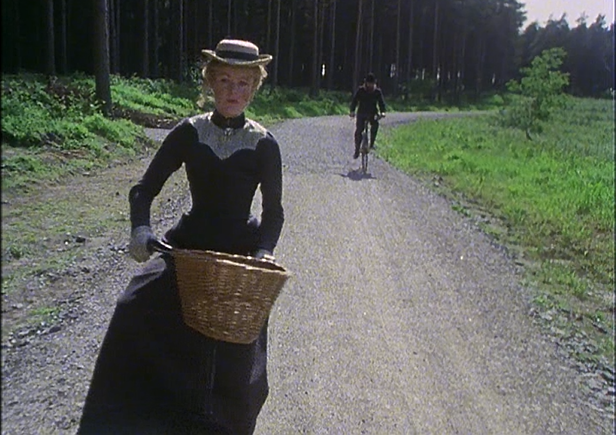
Sunday, February 15, 2015

The Adventure Of Black Peter--The Victorian Enron?!?

The Adventure Of Black Peter is about two (or three) criminals in pursuit of one goal.

One of them is a drunken lout who terrorizes his family, assaults the local pastor, and (allegedly) murders a man for financial gain. His is not the most interesting story.

Another criminal is also a sailor, an admittedly blackmailer who killed the first criminal in (allegedly) self-defense. Again, his is not the story that most engages my interest here.

No, what really intrigues me here is the father of John Hopley Neligan, and the financial shenanigans he was involved here.

Allow to share an extended passage, with a few asides deleted, where the younger Neligan describes the scandal that enveloped his family years ago:
"Well, I will tell you," he said. "Why should I not? And yet I hate to think of this old scandal gaining a new lease of life. Did you ever hear of Dawson and Neligan?"
...
"You mean the West Country bankers," said [Holmes]. "They failed for a million, ruined half the county families of Cornwall, and Neligan disappeared." "Exactly. Neligan was my father."
 ...

"It was my father who was really concerned. Dawson had retired. I was only ten years of age at the time, but I was old enough to feel the shame and horror of it all. It has always been said that my father stole all the securities and fled. It is not true. It was his belief that if he were given time in which to realize them, all would be well and every creditor paid in full. He started in his little yacht for Norway just before the warrant was issued for his arrest. I can remember that last night when he bade farewell to my mother. He left us a list of the securities he was taking, and he swore that he would come back with his honour cleared, and that none who had trusted him would suffer. Well, no word was ever heard from him again. Both the yacht and he vanished utterly. We believed, my mother and I, that he and it, with the securities that he had taken with him, were at the bottom of the sea. We had a faithful friend, however, who is a business man, and it was he who discovered some time ago that some of the securities which my father had with him had reappeared on the London market. You can imagine our amazement. I spent months in trying to trace them, and at last, after many doubtings and difficulties, I discovered that the original seller had been Captain Peter Carey, the owner of this hut."
...

"In any case, if I could prove from Peter Carey's evidence how these securities came on the market it would be a proof that my father had not sold them, and that he had no view to personal profit when he took them."
Well, well. There a lot to digest here.

First, let me say that I take some comfort in knowing that failing banks ruining the lives of massive numbers of families isn't a new phenomenon. It's not, as some like to opine, some result of ethical failures unique to those terrible, ethically-challenged post-Baby Boomers. 120 years ago, the same thing was happening. [Yes, I know this is merely a fictional case. But certainly Sir Arthur Conan Doyle used this as a plot point because such things did occasionally happen in Victorian England.]

The next thing to note is, the story we're given is filtered through the memories of a ten year old boy eager to believe in his father. Of course young Neligan going to accept his father's claims of innocence! Of course he's going to believe any odd piece of "evidence" will clear his father's name, when it does nothing of the sort. So we shouldn't be too hard on John because his story is almost certainly being hogwash.

There are many possible reasons for a bank to fail--poor investments, bad loans that are never repaid, poor economy, mismanagement, bad luck--that don't rise to the level of criminality. Yet the younger Neligan's story doesn't tell us why the bank collapsed, which may in and of itself be an indication that something was awry--if the bank failed for a "legitimate" reason, wouldn't he eagerly be offering this information, to help clear his father's name?

Yet the elder Neligan fled the country "just before the warrant was issued for his arrest." Now, that doesn't mean he was automatically guilty--we've certainly seen plenty of times in the Canon when the authorities went after the wrong man. But it does indicate that the police must have had some evidence that this wasn't just a typical bankruptcy.

His son's insistence that the father didn't "steal" the securities, but just took them overseas to "realize" them and pay off the firm's creditors, shows an ennobling amount of child-like faith. Yet aside from the obvious question of why you would go to Norway to best sell off stocks in North American and Latin American companies, the fact is those stocks were stolen. When Dawson & Neligan failed, it would have gone into court-controlled bankruptcy, and the court-appointed receiver would have control of those securities. It was his duty to take those stocks, "realize" them, and distribute those proceeds to the creditors. It was no longer the elder Neligan's job to reimburse the creditors. There was no reason to try and do it himself. Did he think the British receiver incompetent? Even if he thought he could somehow get more money for the stocks in Norway, there is no reason the receiver couldn't have done that.

We should also question the story on this basis: if the bank had enough stocks to covers the losses ("failed for a million"), then they wouldn't have collapsed. Just sell them and pay your creditors and go quietly out of business. This makes the decision to steal away abroad, ahead of the law, even more suspicious, and harder to believe that it was an honest collapse, and not embezzlement or worse, by the elder Neligan.

Seriously, although ten year old Neligan couldn't see it, the whole story stinks to high heaven. To put it in a modern context: say that after the Enron collapse, CEO Kenneth Lay is caught fleeing in his yacht to Guatemala with a briefcase full of the company's only real assets just before the arrest warrant is issued. Would any sane adult believe a story that he was just going so he could sell off these assets there and give the money to the people whose lives he had ruined, and he'll be back soon, promise?

That's simply not the way an innocent man behaves. The arrest warrant, the panicked plight, the stealing of a million dollars worth of securities--everything points to the elder Neligan being guilty of some malfeasance, whether it is embezzlement or fraud or some Ponzi scheme. And whatever the full story, he played a part in "ruining half the county families of Cornwall." That doesn't mean he deserved to die, but it defies belief to think that he was some innocent samaritan trying to help his poor creditors.

And sadly for John Neligan, recovering the securities from Peter Carey could in no possible way "prove" that his father "had no view to personal profit when he took them." It would just prove that Carey had them. Even if Carey had stolen them from Neligan, that doesn't in any way prove that Neligan wasn't planning on selling them for himself once he got to Norway, had the theft (and murder) not taken place.

It's unclear how informed Holmes on the disposition of such financial doings--his declaration that Inspector Hopkins "must return the tin box" to Neligan is ridiculous, of course. Those securities belong to the bank's creditors, not the elder Neligan's heir.

This case involves a pair of murders. But it also involves financial shenanigans that ruined the lives of hundreds or thousands of people. And Holmes shows the attitude that sadly seems to still prevail today--go after the killers, but let the robber barons keep their ill-gotten gains with little punishment...

OTHER TRIFLES AND OBSERVATIONS:

**Meanwhile, there are the 2 murders.

The "facts" are these. The elder Neligan was lost at sea. He used rescued by the Sea Unicorn. One night, Peter Carey killed him, throwing him overboard, in order to get the securities he carried with him. Years later, the sole witness to this act, Patrick Cairns, tracked down Carey to blackmail him. In a drunken rage, Carey tried to kill Cairns, so Cairns slew him in self-defense.

And yet, all of that--100% of that--comes from Patrick Cairns, a man who has a definite motive to lie.

Cairns is facing the gallows, and has two hopes for a lighter sentence--to claim self-defense, and to claim that Carey himself was a vile murderer who deserved to die, so he was just saving the state "the price of the rope." Pretty clearly, then, Cairns has strong reason to shade the truth, or outright lie.

Should we trust the word of an admitted blackmailer and killer? There are reasons to be skeptical of Cairns' story.

First of all, we have an important question: Why didn't Carey sell all of the stocks he took from Neligan? We're told that "the great majority" of the stocks had not yet been sold. Why was Carey hanging on to them? Saving them for old age? Waiting until the "heat" was off before cashing more in?

Perhaps. But one could also propose that Carey had a partner in the murder of Neligan, and he was holding the stocks until that partner returned. Cairns, perhaps?

Secondly, the pages for that month's logs of the Sea Unicorn were torn away. John Neligan didn't tear them away--he was looking for them. Did Carey rip the out, in a clumsy attempt to hide his guilt?

But Cairns also had access to the books in Carey's "outhouse," after he killed Carey. And if those logs implicated him Cairns in Neligan's murder, then he had ample motive to rip them out that night.

Certainly, we've no evidence for these suppositions--but mainly because Cairns conveniently killed the only other witness to the events.

As to the self-defense, Cairns' own words tell us that Peter Carey was very drunk, and hadn't even unsheathed his knife. Was he really a threat to Cairns? Or was Carey attempting to pull his knife in self-defense when Cairns came at him with the harpoon?

I'm not going to argue that it is a certainty that Cairns is far guiltier than he lets on. But this alternate tale--Cairns partnered with Carey in the murder of Neligan, and years later killed Carey in a fight between partners--fits what little evidence we have just as well as Cairns' story. And as a blackmailing blackguard himself, there is ample reason to be skeptical of Cairns' self-serving statement.

Sherlock Holmes should have been far less trusting of his tale, and, as he chided Hopkins for not doing, "look for a possible alternative, and provide against it."

**When Cairns took the infamous tin, he found "nothing but papers that I would not dare to sell."

Why not? Carey sold some of them. Was Carey that much more financially savvy than Cairns? Did Cairns really think the tin box held a fortune in cash, or jewels? I suppose this disproves my theory above--if Cairns really was this ignorant about the contents of the tin, he couldn't have been a partner with Carey in the whole affair...

**By the way--thank you, Sir Arthur, for giving us two characters with such easily confused names. Peter Carey and Patrick Cairns? Would you like to know how many times I mixed them up while writing this?

Of course, P.C. are common enough initials, so I can't object to the coincidence of both characters' having them. Yet Doyle could have named one of them, oh, I don't know, Pinky Clydesdale, to distinguish them more, and reduce the confusion of poor readers and bloggers.

**Two more of Holmes' unrelated cases: "his famous investigation of the sudden death of Cardinal Tosca--an inquiry which was carried out by him at the express desire of His Holiness the Pope--down to his arrest of Wilson, the notorious canary-trainer, which removed a plague-spot from the East End of London."

**Watson confirms that Holmes frequently worked for little remuneration--although we should note that the doctor tells us the Sherlock "seldom" claimed "any large reward," both important qualifiers to at least partially rebut those who claimed that Holmes for free.

But the more interesting point might be how much Sherlock spent himself on cases he wasn't even hired for.

Remember, Holmes had been investigating this case for quite awhile before he even had a client. Apparently, after reading the newspapers'  account of the inquest, he dedicated himself to solving the case, even though he hadn't been contacted by Inspector Hopkins yet. At the end of the affair--that is, on his second day of official involvement--Holmes sighs that the case has "haunted me for ten days."

In that time--again, with no client--Holmes took it upon himself to put a lot of effort into this investigation for eight days before he was even invited--harpoons, fake captain, fake expeditions, ads. In his own words:
I spent three days in wiring to Dundee, and at the end of that time I had ascertained the names of the crew of the SEA UNICORN in 1883. When I found Patrick Cairns among the harpooners, my research was nearing its end. I argued that the man was probably in London, and that he would desire to leave the country for a time. I therefore spent some days in the East End, devised an Arctic expedition, put forth tempting terms for harpooners who would serve under Captain Basil--
Add in the time he spent trying to harpoon a pig at the butchers, and you have Holmes making a huge investment of time, and money, investigating a case in which he isn't even involved in!! Three days of wiring, setting up fake ads and a fake expedition, paying rejected seamen candidates a half sovereign each, paying the butcher for the pig, buying a harpoon...That's a lot of spending on a case where he had no expectation of being hired.

If that was typical of Holmes in this era, it's little wonder he was eager to take the reward that the Duke of Holderness offered in The Priory School. If the man was willing to part with his money so freely, why shouldn't Sherlock use it to finance the out-of-pocket expenses on his private investigations?

**"Captain Basil"--c'mon, admit it, you immediately thought of Basil Fawlty, didn't you.?

**Meet Inspector Hopkins--this is our first encounter with the detective, even though he's apparently known Holmes for quite awhile, and become something of a protegee to Sherlock.

It's refreshing to see a Scotland Yard man who is not resistant to Holmes methods (even though they're all willing enough to take his results!), and even embraces them.

And Holmes seems to respond well to the mentor's role. Even when he chides Hopkins, it's much more gently than his rebukes to other Yard men.

Until he's away from Hopkins, of course. Then Sherlock is far more blunt in his evaluations:
At the same time, Stanley Hopkins's methods do not commend themselves to me. I am disappointed in Stanley Hopkins. I had hoped for better things from him.
Dude, not so harsh!!

**Carey slept in an "outhouse"--heh heh.

Childish laughter aside, it is a fairly telling character detail--a man so inured to life at sea, he cannot sleep unless it is a room made up to look exactly like a ship's cabin.

You could play it up as a moral, I suppose--even with the money Carey stole when he killed Neligan, he couldn't buy himself anymore happiness than he already had, as captain of a vessel. Even after purchasing a nice estate, he couldn't bring himself to sleep there. Guilt over his crimes? Or just so conditioned by the life at sea that he simply couldn't adjust to life on land?

And contrast it with Cairns', who couldn't wait to get "free of the sea for life." I have to wonder if Cairns would have slept well had he escaped with his treasure, or if he, too, would have had to make a shelter from life on land...

**Why was Peter Carey so hard to track down? It was 12 years later--why did it take Cairns and Neligan so long to track him down? Granted, he "travelled for some years"--but he lived at Woodman's Lee for six years. It's not as if he was living under an assumed name...and he fairly infamous in his community. It couldn't have been hard to track him down, could it?

Of course, that just heightens the unlikely and enormous coincidence that, after years of searching, both Cairns and Neligan found Carey--within days of each other. And that Neligan just happened to show up moments after Cairns killed Carey.

**Times have changed a bit, I guess.

Holmes focuses on the rum as a clue, asserting that no one but a sailor would drink rum when whiskey or brandy was available.

Perhaps that may have been true in Victorian England. As the manager of a liquor store, however, I can tell you that it is most certainly not true in 2015 in America. Indeed, in my experience, a good 75% of college aged youth (near to John Neligan's age) would never, ever drink brandy or whiskey if rum were available.

**The tobacco pouch clue is simultaneously a great clue (Carey didn't smoke, there was no pipe) and a great red herring (the initials). That's crackerjack mystery writing there. Well done, sir Arthur.

**The police initially dismiss the testimony by the stonemason Slater of seeing a stranger in Carey's cabin two nights before the murder. It was before the murder, it was through the trees, at some distance, and Slater had been at the pub drinking.

Yet Holmes gives 100% credence to Slater's sighting. All of the above objections still exist, though. Under such conditions, could Slater really have made a firm negative identification from a silhouette on a window shade? And even if Slater was correct, that fact that person A was in the cabin on Monday doesn't prove that person B didn't commit the murder on Wednesday. (It also doesn't prove that person B wasn't also in the cabin on Monday, merely away from the window...)

Cairns' confession means that Slater's testimony wasn't necessary, of course. But for the purposes of Holmes' deductions, it does seem a very slender thread upon which to hang "Neligan couldn't have done it."

**Holmes: "My good Hopkins, I have investigated many crimes, but I have never yet seen one which was committed by a flying creature."

So much for those who would give us a Holmes Vs. Dracula pastiche...

**It is good to see Holmes taken aback by the revelation of the notebook.
 Sherlock Holmes's face showed that he was thoroughly taken aback by this new development. 
"I must admit both your points," said he. "I confess that this notebook, which did not appear at the inquest, modifies any views which I may have formed. I had come to a theory of the crime in which I can find no place for this.
Of course, this clue, while vital, leads Hopkins in the wrong direction. It does "give them for the first time some indication of the motive." But it also points Hopkims to Neligan who, while present in the cabin, was not the murderer.

Holmes manfully admits that he, too, might have been led astray in the investigation had he learned of the notebook and its stock listings from the beginning. He succeeded "[s]imply by having the good fortune to get the right clue from the beginning."

It is interesting to hear Holmes admit the role that chance might play in an investigation, and in a detective's flow of logic, and how sometimes even the right evidence can lead to the wrong conclusion, if you don't properly understand the context.

**Hopkins to a captured Neligan: "If you have no answer, it may go badly with you at the trial."

So much for the right to remain silent...and "the magnificent fair play of the British criminal law,"of which Watson was enamored back in The Dancing Men...

**The capture of Cairns:
"Shall I sign here?" he asked, stooping over the table. Holmes leaned over his shoulder and passed both hands over his neck. "This will do," said he. I heard a click of steel and a bellow like an enraged bull. The next instant Holmes and the seaman were rolling on the ground together. He was a man of such gigantic strength that, even with the handcuffs which Holmes had so deftly fastened upon his wrists, he would have very quickly overpowered my friend had Hopkins and I not rushed to his rescue. Only when I pressed the cold muzzle of the revolver to his temple did he at last understand that resistance was vain.
This is essentially the exact same ruse and set-up that Doyle used in the capture of Jefferson Hope in A Study In Scarlet...

**Hopkins: "I am the pupil, and you are the master." Getting dangerously close to quoting Star Wars here.

Someone, quick--write a fanifc where Hopkins takes what he learns from Holmes and becomes a crime lord. When confronted, he tells Holmes, "When I left you  I was but the learner. Now, I am the master!" "Only a master of evil, Hopkins!" replies Holmes.

Yes, I should be severely beaten for that.

**"If you want me for the trial, my address and that of Watson will be somewhere in Norway--I'll send particulars later."


What the heck?!? This comes out of nowhere. Was this a planned vacation? Can it be a mere coincidence that, suddenly, Holmes is keen on traveling to Neligan's planned destination? Did he deduce some lead on where some more of the missing securities might be?


Cairns had just told Holmes moments earlier that the crew of Neligan's yacht had "made for the Norwegian coast in a dinghy." Can it possibly be just a coincidence that Holmes immediately announces, out of the blue, a trip to Norway?

Or maybe Sir Arthur was just teasing us...?

SHERLOCK HOLMES WILL RETURN IN--THE ADVENTURE OF CHARLES AUGUSTUS MILVERTON!

Sunday, February 8, 2015

Once Again I Fail

Obviously, this is not The Adventure Of Black Peter.

I had forgotten how overextended I am each year in February and March, and things are piling up too quickly for me to keep up.

So, let's just make this blog bi-weekly for the next few months.

And I heartily promise that The Adventure Of Black Peter will be here next week.

Sorry.

Sunday, February 1, 2015

The Adventure Of The Priory School--The Nobility Really IS Different!!

One of the things I love most about the Canon is the glimpse it gives into the culture of another era (and for the non-British reader, into the culture of another country). Through 4 novels and 56 short stories, Sir Arthur Conan Doyle takes us through all strata of Victorian society, from the most humble servant to the most exalted master, from the most vile criminals to the noblest, most illustrious people in the land.

Sometimes, though, these cultural differences can make their characters seems, to a modern reader (at least, a modern American reader), like aliens.

Which brings us to The Adventure of The Priory School.

We Americans are taught to admire--and yes, to occasionally laugh at--the famous (and obviously stereotyped) British reserve, the "stiff-upper lip," the "keep calm and carry on."

But if we're to believe Doyle's tale of the aristocracy, the English upper-upper class could take emotional repression to levels a Vulcan would be jealous of.

Arthur, Lord Saltire, has been missing for three days--either run away or kidnapped--as has one of the teachers at the Priory School. For almost anyone normal human parent, this would be a cause for almost unendurable agony, and the parent would do almost anything--and many would strike the almost--to get their child back.

Yet time and time again in this story, we're told that Arthur's father, the Duke of Holdernesse, insisted on less effective means being used to find his son--and even that at times he blocked important avenues of investigation. Why? Because the Duke was uncomfortable discussing his private life, and feared public scandal.

Again--his son was missing, and he surely seemed as he were more concerned with his personal reputation than finding the child.

Dr. Huxtable tells us that they Duke tried to keep it out of the papers. When Holmes chides him for what has so far been a "deplorably handled" investigation, Huxtable admits it, but blames that on the Duke: "His Grace was extremely desirous to avoid all public scandal. He was afraid of his family unhappiness being dragged before the world. He has a deep horror of anything of the kind." A deeper horror and unhappiness than possibly losing his son forever?

When describing the Duke's relationship with his son, Huxtable paints what surely seems to be an unflattering picture: "His Grace is never very friendly with anyone. He is completely immersed in large public questions, and is rather inaccessible to all ordinary emotions. But he was always kind to the boy in his own way."

Rather inaccessible to ordinary emotions? Kind the boy in his own way?

 When they arrive in Mackleton, the Duke's private secretary, James Wilder, upbraids Huxtable for involving Sherlock Holmes: "His Grace is particularly anxious to avoid all public scandal. He prefers to take as few people as possible into his confidence." Admittedly, we will find out that Wilder has an ulterior motive for wanting to impede the investigation. But he is making this objection in front of the Duke, who does not refute the characterization of himself as a man who puts a higher priority on avoiding scandal than find a missing heir.

The Duke even agrees that the realm's greatest detective shouldn't have been involved without prior consultation. As Holmes is already there, the Duke is wise enough to make use of this resource. After a brief discussion, though, the Duke leaves, even though Holmes clearly has more questions:
It was evident that to his intensely aristocratic nature this discussion of his intimate family affairs with a stranger was most abhorrent, and that he feared lest every fresh question would throw a fiercer light into the discreetly shadowed corners of his ducal history.
So "intensely aristocratic nature" means being so repressed that you're willing to risk your son's death rather than be frank with the one man most likely to find him? Unfathomable!

And when Holmes solves the mystery, and the Duke has learned that his illegitimate son has kidnapped his heir, and placed him in the care of a murderous blackguard, what is his primary concern? Arthur's safety? Punishing Wilder?

Nope. "I appreciate your conduct in coming here before you spoke to anyone else," said he. "At least, we may take counsel how far we can minimize this hideous scandal." Minimizing the scandal. That's what is uppermost in the Duke's mind.

And even though the Duke knew that Wilder was a cad, he kept him around, in part, because of "his power of provoking a scandal which would be abhorrent to me." When the Duke discovered where his son was, he did not rush to him immediately, "because I could not go there by daylight without provoking comment." Oh, heaven forbid that anyone comment.

Am I being too harsh on the Duke? A tad, perhaps. Walk a mile in another man's shoes and all that.

Yet If I were to be smart-alecky, I might suggest that if the Duke found public attention that abhorrent, he should have not lived a public life. No one forced him to be First Lord Of The Admiralty, or hold other cabinet posts. Of course, he might have felt that to be a duty to Queen and Country and all that. And I could suggest that if the knowledge that he had a child out of wedlock with someone of low status was too damaging to bear, well, don't have out of wedlock sex with such a person. Again, too cruel of me to say that--life happens, right? And I might suggest that if the woman you loved more than life itself couldn't marry you because you're a Duke, well, stop being a Duke. Nobility has abdicated for love before, and since. Oh, but to give up the 3 homes and 250,000 acres and mines and money? Heavens, no.

The worst part is, the consequences of any "public scandal" would be completely inconsequential.  The Duke isn't currently part of the government--he's "the late Cabinet minister." So it's not as if he could lose his job. He couldn't be fired from being Duke (could he?). Up until he learns the truth, none of the "scandal" that would be revealed was in the least illegal. So the only real consequence of any of this becoming public would be a brief bout of personal embarrassment. Yet the Duke fears this so much, he's willing to risk his son's safety, and shield murderers and kidnappers. Amazing.

Through the Duke of Holdernesse, Doyle paints a damning portrait of aristocracy--and Watson's comments would imply that it applies to most of the nobility. A savage repression of emotion, a fanatical fear of scandal and dishonour, a lack of attachment to loved ones--all covering up an emotional immaturity and a willingness to flout social laws, as long as no one finds out.

The nobility really are different than you or I.

OTHER TRIFLES AND OBSERVATIONS:

**So, has the Duke never read King Lear? Keeping your illegitimate son around your to watch your legal heir get ready to inherit everything really isn't a good game plan.

**When, exactly, was Wilder going to make his demands? The boy had been missing three days before Holmes arrived, and the police were nowhere near the truth.

The Duke said that Wilder hadn't made any demands yet because "events moved too quickly for him, and he had not time to put his plans into practice."

How much time did he need? What was he waiting for?

**Had I written this six months ago, I'm sure that I would have made some "Dr. Huxtable" jokes.

That would be terribly inappropriate now, of course. Let us instead mock his given name, Thorneycroft. Really? Throneycroft?

It is an a real name, jokes aside, albeit nearly extinct. This website tells us that there is exactly 1 person in the entire United States with that name...lucky guy. There are, however, 111 people with Thoneycroft as a surname.

**Goofy name aside, what a great entrance!!
...and then he entered himself--so large, so pompous, and so dignified that he was the very embodiment of self-possession and solidity. And yet his first action, when the door had closed behind him, was to stagger against the table, whence he slipped down upon the floor, and there was that majestic figure prostrate and insensible upon our bearskin hearth-rug
**More apocryphal cases: "I am retained in this case of the Ferrers Documents, and the Abergavenny murder is coming up for trial."

**Of course, as a consequence of those cases, Holmes initially claims that, once again, he is unable to take up a new case from a desperate client. This has been a growing problem since his return from the Hiatus.

In Norwood Builder, Holmes opined, "London has become a singularly uninteresting city since the death of the late lamented Professor Moriarty." Yet in the three subsequent stories, Holmes has declared himself far too busy to take on new cases immediately, and Watson spoke of the hundreds of cases which he had in the period. And he obviously wasn't too busy for the Ferrers Documents and the Abergavenny murder.

Given that someone died as a result of this "I'm too booked up" attitude (in Dancing Men), we have to wonder what Holmes' priorities were at that time.

**Many have questioned Sherlock taking the reward offered by the Duke, to which I have three responses.

First, Sherlock has often taken rewards. Indeed, we're told in Final Problem, for example, that rewards for cases he took on for the Scandinavian royal family and the French republic have left him so well off that he could retire if he wished. So, no, taking payment or rewards from well-to-do clients is nothing new for Sherlock.

Secondly, if we look at the fact that Sherlock seems compelled to take more cases than he can handle in this period, a supposition suggests itself: after three years of wanderings during the Hiatus, and after surreptitiously buying Watson's practices, perhaps Holmes was now broke, and needed the money. Quite possibly his "I am a poor man" at this end of this story isn't a jest...

Finally, we must say the Duke certainly wasn't deserving of being one of Holmes' "charity" cases. His behavior was fairly reproachable after his son's kidnapping. And throughout the story, His Grace throws around the weight of his checkbook, trying to buy his way through problems. When the red herring gipsies are arrested, Huxtable declares that "either the fear of the law or the Duke's purse will certainly get out of them all that they know." Holdernesse pretty unsubtly tries to bribe Holmes and Watson to keep quiet about the outcome of the affair, offering to pay them twice the promised reward if the details "go no farther." And when Holmes says "but I have no doubt that your Grace could make [Hayes] understand that it is to his interest to be silent," it's pretty clear that Holmes is certain the Duke will once again be wielding his wallet to buy his way out of the mess. Given all of that, I can't see how anyone can reproach the detective for speaking to the Duke in the only language he seemed to be able to communicate in.

**Note the story's constant emphasis on Arthur being the "only" son and heir. Heck, that fact is brought up three times in the first five pages of the story! Doyle is setting us up for the twist at the end, and doing so quite well--you really only notice that point being hammered home upon re-reading.

**Except for once near the end, Arthur is always referred to as Lord Saltire, not by his given name. Even his father feels inappropriate calling him by his given name: "But I feared so much lest he should do Arthur--that is, Lord Saltire--a mischief..."

This is probably just the American in me, but it is difficult to imagine a ten year-old boy constantly being called "Lord Saltire." Do even his school chums have to call him that? How can a teacher be stern with him when he has to use terms of nobility to even say his name?

**The mysterious German master Heidegger-- a man with "great references, but silent and morose." How did he get those great references, then? Perhaps in Germany, silent and morose is a compliment?

Just as curious: if he was silent and morose, and "not popular with the masters," how did Aveling become so knowledgeable about Heidegger's bicycle tires? If Heidegger were aloof and uncommunicative, would he have told a fellow teacher about his tires? Was Aveling a cycling enthusiast, and knew the tires everyone at the school used?

**Interference from the Duke or not, the police certainly ran a terrible, terrible investigation. There was a sighting of a man and a boy on a train--surely not an uncommon occurrence--and they completely stopped the investigation, assuming that had to be the missing people?!? One of the closest buildings is a business owned by a man known to have a grudge against the Duke--and they never bothered to even question him? After three days, no one had looked for tracks or a bicycle in the moor? Pathetic.

**Sherlock does a lot of Columbo in this story, giving the "just one more question" bit both to Huxtable and the Duke, and stretching that one question into several in each case.

**More evidence of the Duke's emotional aloofness to Arthur: the house only a couple of miles away the school...yet the Duke writes letters? No visits? No weekends at home?

**Watson's description of the Duke:
He was a tall and stately person, scrupulously dressed, with a drawn, thin face, and a nose which was grotesquely curved and long. His complexion was of a dead pallor, which was more startling by contrast with a long, dwindling beard of vivid red, which flowed down over his white waistcoat with his watch-chain gleaming through its fringe.
Very odd and attention-drawing look for a man so concerned with image and public perception...

**His Grace wrote "twenty or thirty letters" that one day?!? What a demon...just imagine him in the era of voice mails and texts and emails!

**The map that Sherlock shows Watson is a total spoiler!!

It reveals the locations of the tire tracks before Holmes and Watson set out and discover them! It shows the location of Heidegger's body--before we ever know that he is dead!!! Kind of ruins any suspense there...And if Holmes and Watson are studying this map, how can they be surprised when they find the tracks and corpse?!? (Yes, I'm being an idiot, but the point remains, this was a poorly designed map to insert at this point in the story)

Still, it makes you wonder if there is a shop selling spoiler ordinance maps in every town. That certainly would make many a mystery easier to solve...

**The story does lag a bit in the long and terribly unexciting search of the moors. Part of the problem may indeed lie with the map, as we wait (and wait) for our duo to discover the things that the map has already revealed to us. The amazingly long discussion of bicycle treads and tire depths doesn't help...

**Why would Heidegger have climbed down ivy in pursuit of Arthur? Surely, it would have been quicker and safer for a grown man to take stairs? Or was he in the habit of climbing out his window, and already knew that the vines could support his adult weight?

**Sherlock's exchange with Reuben Hayes exchange is a classic:
I suppose you haven't such a thing as a carriage in your stables?" 
"No, I have not." 
"I can hardly put my foot to the ground." 
"Don't put it to the ground." 
"But I can't walk." 
"Well, then hop." 
Mr. Reuben Hayes's manner was far from gracious, but Holmes took it with admirable good-humour. "Look here, my man," said he. "This is really rather an awkward fix for me. I don't mind how I get on." 
"Neither do I," said the morose landlord.
Comedy gold.

**In light of that exchange, which makes Hayes likeable and interesting, we really need to have more of Hayes' story explained. "I was head coachman once, and cruel bad he treated me. It was him that sacked me without a character on the word of a lying corn-chandler." Aside from the issue of what the hell is a corn-chandler, we should be told--what did the "lying corn-chandler" accuse him of? Is this story true? False? Exaggerated? Does Hayes have a legitimate grievance against "the Dook," or he just a typical ne'er-do-well blaming everyone but himself for his own misfortune?

Still, Hayes seems to have ended up OK, as inn-owner, right? He was better off than a lot of folks. Too bad he's going to the gallows...

**Great name, The Fighting Cock.

No, I'm not being dirty-minded (at least, not any more than usual)! There is an American bourbon called Fighting Cock, and that's all I could think of each time the name came up. Occupational hazard of working in a liquor store, I guess...

**I glad Watson's (several?) war wounds were aggravated by Sherlock climbing on his back to peek in a window...

**Holmes certainly can't resist being the showman, and teasing his victims: "I accuse YOU. And now, your Grace, I'll trouble you for that check." Great moment.

**Still ,that does make it ironic that Holmes is completely taken aback by the revelation that Wilder is also the Duke's son. I really hope that Watson never lets him forget how flummoxed he was at that moment.

**A great discussion between Holmes and Holdernesse about the morality and legality of Wilder's culpability for Heidegger's death.
The Duke: "But James knew nothing of that. You cannot hold him responsible for that. It was the work of this brutal ruffian whom he had the misfortune to employ."

Holmes: "I must take the view, your Grace, that when a man embarks upon a crime, he is morally guilty of any other crime which may spring from it."

The Duke: "Morally, Mr. Holmes. No doubt you are right. But surely not in the eyes of the law. A man cannot be condemned for a murder at which he was not present, and which he loathes and abhors as much as you do."
Leaving aside the question of whether Wilder really abhorred the murder, or was just trying to save his own skin, the Duke is clearly wrong about the legalities involved. Britain at the time recognized the doctrine of "felony murder," which held that everyone involved in the commission of a felony was to be held liable for any killings that occurred during that felony, whether they were directly involved in the act or not.

The reader will have to decide for themselves whether an eminent statesman would know that, or if he was being willfully ignorant in order to protect his unworthy son. Or perhaps he just thought the law shouldn't apply to his kin...

**Holmes (quite rightly) has a quite stern remonstrance for Holdernesse's shockingly unbalanced behavior towards his sons:
"Even more culpable in my opinion, your Grace, is your attitude towards your younger son. You leave him in this den for three days...What are promises to such people as these? You have no guarantee that he will not be spirited away again. To humour your guilty elder son, you have exposed your innocent younger son to imminent and unnecessary danger. It was a most unjustifiable action."
Preach on, Sherlock.

**Many commentators have objected that, since Hayes is facing the gallows, the was really no way that the Duke "could make him understand that it is to his interest to be silent."

Of course there is a way. There may be no way to save Hayes from execution. But given how free the Duke is with throwing his checkbook at problems, Holmes surely understood that the Duke could promise that Hayes' family would be taken care of, no doubt with a large sum of money, if Hayes kept quiet about the full circumstances of the crimes. Assuming, of course, that Hayes cared about such things. The man on death row bribed to keep silent/lie so his family will benefit is a staple of crime fiction.

**Holmes is right to rebuke the Duke for aiding in Hayes' flight, which made him an accessory to the murder. But then, Holmes agrees to keep quiet about Wilder being allowed to go Australia to "seek his fortune" (and no doubt with a healthy starting fund supplied by his generous father)?!?!

Who is the accessory now, Sherlock? And after all of your lecturing, does this in any way sound like justice for the blackguard Wilder?

**Even if Wilder's continued presence was the source of the marital difficulties between the Duke and Duchess, somehow I doubt removing him will automatically make things better. After she hears the account of this week, and the Duke's role in it, can you really believe that she would just come back all smiles and forgiveness? That the viper her husband allowed into their home kidnapped her only son; that he placed her child with a low murderer; that the Duke hindered the investigation in the name of "avoiding scandal;" that the Duke learned the truth but allowed his son to be held for three more days; that the Duke paid to help the murderer attempt to escape, and paid to let Wilder get away unpunished?? None of this seems like a foundation for reviving a failed marriage.

Assuming, of course, that the Duchess finds out about most of this. You have to wonder what was in that letter the Duke wrote to her. Probably very little of the truth, I'm thinking...

SHERLOCK HOLMES WILL RETURN IN--THE ADVENTURE OF BLACK PETER!!

Sunday, January 25, 2015

The Adventure Of The Solitary Cyclist--Who The Heck IS Bob Carruthers?

There is one big mystery that is left unresolved at the end of The Adventure of The Solitary Cyclist--who the heck is this Bob Carruthers?

We know who he is, of course: Violet Smith's employer and would-be bodyguard, who at first participates in a plot too woo her for her inheritance, but then repudiates the plan and tries to protect her.

But we're left with an awful lot of questions about the man, some curious personality traits and other circumstances that make him seem unlikely to play the role he does in this story.

This is relatively unusual for a Sherlock Holmes story. Sir Arthur Conan Doyle usually made sure we had at least some background on the villain, some version of their life story and how they came to be involved in the crime. Hell, early in the Canon, he would devote entire chapters (or even 1/3 of the book!) to giving us the histories of the bad guys. Even later in the short stories, it was rare for us not to get a fairly good look at the crooks and their motives (even if sometimes it was only through Holmes' speculation).

But Solitary Cyclist is different. We know virtually nothing about our villains, Woodley and Carruthers. There is no history for them--what were they doing in South Africa, how did they come to know Ralph Smith, how and why they hatched their plot--we barely even get their first names!! This is unusual--in most other Holmes stories, we would have gotten a least a few cursory paragraphs detailing their biography and their motives.

This doesn't matter too much with Woodley--he's nothing but a two-dimensional character. Literally all we know about him is that he was "the greatest brute and bully in South Africa--a man whose name is a holy terror from Kimberley to Johannesburg" and "had the reputation of being a most dangerous ruffian." No real history or rap sheet or explanation. Perhaps none is needed--he's only in this story to play the archetypical blackguard, twirling his red moustache and menacing Miss Smith. In other stories, Doyle would have given us some of his back story, but we didn't need that information to understand the character.

But Bob Carruthers is something else. He's an enigma, a man who has tantalizing hints of much more going on behind the facade. On the surface, he surely doesn't seem like the type who would be in league with a notorious bounder and a defrocked priest to put on a marriage under false pretenses so they could swindle the bride out of her inheritance. Holmes notes the curiosity of "the connection between Carruthers and Woodley, since they appear to be men of such a different type."

Of course, that doesn't necessarily mean much. Many a con man and cad can put an a respectable exterior--that's a great way to be successful in that "business." But somehow Carruthers' role doesn't feel like a "character" he is playing.

He is a widower (or, at least that is what he tells Violet), and has a child. If true, how and when did his wife die? Was it in South Africa, and her passing left him in such straits that he was enticed into this ridiculous scheme? Did she die in England, and her death was the impetus for him going to South Africa in the first place?

Of course, there's no reason a widower with a child in tow couldn't be a con man--see Paper Moon. But I don't get that feeling about Carruthers, do you?

Carruthers also wasn't merely a broke con man--he had some money, even if he weren't rich. Holmes harped on the fact that he couldn't be "rich," as he had neither carriage nor horses. Still, he was, as Miss Smith said, "at least fairly well-to-do." He was able to afford passage for himself and his daughter from South Africa. He was able to afford (renting?) a decent enough estate, and paying a housekeeper. Not to mention, of course, over-paying for a music teacher. Yes, there was an ulterior motive, and if their plan worked they wouldn't have had to pay the full £100 yearly wage. But Carruthers clearly had funds for rent and two servants and the upkeep of his family--he must have had some money.

According to Violet, "he goes into the city two or three times a week. He is deeply interested in South African gold shares." A lie to cover his other movements, or did he actually have some money of his own? If he does have some money, how, then, does he get tempted into this scheme?

And then Carruthers broke the cardinal rule for con men: he fell for his mark! It was, as Watson pointed out, a selfish love. Nonetheless, it did cause him to almost immediately repudiate the part of their plan allowing Woodley to woo her. And after Carruthers himself proposed and was turned down, he let the matter lie--no pressure or kidnapping or other means to press his suit. He did his best to keep Woodley away from her, and took up his (ineffective) "mystery cyclist" routine to protect her. He even went so far as to attempt to murder his erstwhile partner when he believed Woodley had forced a marriage upon Violet!

These are the unexplored depths to Bob Carruthers. Is he just the world's worst con man, a grifter "reformed" by his unrequited love for a good woman? Or was he a decent family man who somehow became swept up in an evil scheme, forced by circumstance or desperate need to throw his lot in with the vile reprobate Woodley? If the latter, how in the world did he get involved with the "holy terror" of South Africa? How does a good man end up playing cards for the right to woo an heiress under false pretenses? On the other hand, how does a criminal end up throwing it all away for a "love" he knows will never be returned?

Not that anything said above absolves Carruthers. He did voluntarily enter this scheme, no matter what his reasons. And if he truly and honestly repudiated the scheme, we would have told Violet the whole story, or gone to police, and lived with the consequences. Had he done that, he might have earned full leniency from the courts. Instead, the half-measure of "following her in disguise on a bicycle" did nothing to protect her, and merely caused her much unease. And the rash attempt to murder Woodley was not terribly ennobling--was he really trying to protect her, or just acting out of jealous rage?

Still, I can't help but be strongly curious about who Bob Carruthers is, and how he came to this point. That's good--it shows that Doyle did a good job of making the character more interesting than a mere cardboard cut out. But it also shows that Sir Arthur failed to do what he usually did, and fill out the villains' backgrounds more fully. So we have no choice but endless speculation, with no real answers...

OTHER TRIFLES AND OBSERVATIONS:

**Speaking of underdeveloped villains, what about our defrocked priest, Williamson? Surely there's a story worth relating there. But the only background we get is when Sherlock tells us that his questions at a "clerical agency," which told him that Willamson's "career has been a singularly dark one."

Oh, come on, man--you can't leave us hanging like that?!? What did Williamson do that lead to his ouster? What "dark" deeds led to him renting himself out as a forger of marriage licences and solemnizer of forced weddings? Sure, he's a profane, vile monster (who packs a pistol!!), which is great! But would it have killed Doyle to at least give us one paragraph of real background? Ahh, not knowing is driving me nuts!!
**Watson writes, "I confess that I had not up to now taken a very serious view of the case, which had seemed to me rather grotesque and bizarre than dangerous."

Oh, Doctor, "grotesque" is right--and nothing compared to how the entire case is about to go completely Grand Guignol. What started as a quiet, calm case about a possible stalker suddenly turns into violent melodrama!

When the trap turns up empty, Holmes over-the-top cry of "Watson--abduction! Murder! Heaven knows what!" sets of a course of thrilling, rapid-fire events: The mystery cyclist shows up; a chase through the trees; the injured groom; "a woman's shrill scream--a scream which vibrated with a frenzy of horror--burst from the thick, green clump of bushes in front of us. It ended suddenly on its highest note with a choke and a gurgle."; the bound and gagged woman, in a forced marriage conducted by a defrocked priest...oh, how Gothic and demented! And then one of the great exchanges in literary history:
"You're too late. She's my wife." 
"No, she's your widow."
The revolver cracks! The varlet falls! The false priest pulls a gun!!

And then Holmes has to spoil it all by being the only adult present: "Enough of this. We'll have no more violence."

**Watson writes that, from 1894 to 1901, Sherlock Holmes had "hundreds of cases"--hundreds!!--and he had "preserved full notes on all these cases."

Hundreds of cases with full notes!! Doctor, you owe us a good many more stories! Get writing!!

**Watson once again explains how he picks cases...
I shall preserve my former rule, and give the preference to those cases which derive their interest not so much from the brutality of the crime as from the ingenuity and dramatic quality of the solution.
Yet, as he has so often done before, after giving that rule, Watson goes on to choose a case that doesn't fit that rule:
It is true that the circumstance did not admit of any striking illustration of those powers for which my friend was famous, but there were some points about the case which made it stand out in those long records of crime from which I gather the material for these little narratives.
So why have the rule to begin with, John?

**Ways to drive Holmes chronologists crazy: Watson very clearly and firmly give the date as Saturday, April 23, 1895. No coy vagueness, no wiggle room.

4/23/1895 was a Tuesday.

It's enough to make you think that Doyle was doing it on purpose to play with the heads of the playing The Grand Game...

**We get mention of two more apocryphal cases: "the peculiar persecution of John Vincent Harden," and "Archie Stamford the forger."

**Again, Watson follows Holmes' deductions without needing explanation: "I observed the slight roughening of the side of the sole caused by the friction of the edge of the pedal." You've come a long way, John Watson!

**So, Holmes deduces that Violet Smith must be either a typist or a musician from the "spatulation" of her finger-tips. And Holmes goes on to decide that "There is a spirituality about the face, however, which the typewriter does not generate. This lady is a musician."

So, typists can't be "spiritual"? What if they're writing enlightened, religious texts? What if the musician plays nothing but crude, vulgar dance hall music?

 Of course, given that Doyle himself is a writer, perhaps he is engaging in some self-mockery, here...

**Miss Violet Smith:
[O]ne day we were told that there was an advertisement in the TIMES, inquiring for our whereabouts. You can imagine how excited we were, for we thought that someone had left us a fortune.
Did this kind of thing happen often? Seriously? Were there really that many long-lost relatives leaving surprise bequests, that merely seeing someone looking for you in the classifieds meant that it was a decent assumption that someone was leaving you a fortune?

Then again, in the pre-personal-mass-communications era, it could be much harder to track someone down, so putting advertisements in the classifieds may have been the best way to find someone. There was no Facebook, or Google, or even phone books.

We've seen that Holmes has often proceeded under the assumption that most people were checking the advertisements on a daily basis. This might help explain why--you never knew when a rich uncle might have passed, leaving you a tidy inheritance!!

**The story is quite clear that our mysterious cyclist supposedly stayed 200 yards behind Violet. We're told this several times.

The Granada adaptation either didn't think that was dramatic enough, or couldn't measure:


**Hey, wait a minute--how did Carruthers beat Violet Smith home? Did he?

Look at the timeline: She leaves the station for home on bicycle. Once she gets near Charlington Hall, Carruthers comes out from hiding on his own bike, and follows at a distance of 200 yards. Once she was sufficiently passed Charlington Hall, he would end his shadowing, he would come BACK to the Hall gates, take "several minutes" to "adjust his necktie"(?), and then go into the Charlington estate.

So after being 200 yards behind, he would backtrack, spend several minutes on his clothes, go into another property altogether...and still beat her home to Chiltern Grange? Was there some wonderful shortcut that allowed him to make up that much time?

The same, of course, would apply to her trips from Chiltern Grange to the train station--he would have to leave before she did, in order to get to his hiding place and be ready to follow when she cycled by.

So, in other words, he was always absent from home when she left or returned? He was never around when she had seen the solitary cyclist? Did Miss Smith not think this suspicious at all? Ignoring that is akin to not noticing that Superman and Clark Kent are never seen together...

**This was the second case in a row (in publication order) that Holmes was "too busy" to help out immediately. And like the first time (The Dancing Men), this delay almost resulted in tragedy. Indeed, in this case, it was mere happenstance that no one died.

Perhaps it's time for Sherlock to take on an intern or a partner to farm out some of these cases to. It can't be good for business if your clients keep dying because you're too busy to leap right into their cases.

**Poor Watson. Holmes is rather a dick to him--"you really have done remarkably badly."

Geez, Holmes, he followed your directions to the letter: he concealed himself to observe the mystery cyclist, and inquired about the occupants of Charlington House. If you'd wanted him to watch from a particular point of concealment, and inquire from specific places about the guys at Charlington, perhaps you should have given him more specific instructions.

**Holmes boasts of making "discreet inquiries." Which consisted of talking to a "garrulous" bartender while the man you're investigating is within earshot. Not so discreet, methinks.

And yes, Sherlock did best Woodley in boxing. But when he woke up later, Woodley and crew now knew for a certainty that a stranger was investigating the goings-on at Charlington House. Maybe not the smoothest move, detective.

I suggest that you immediately apologize to Watson, Holmes.

**Holmes berates himself greatly for being late, and for not anticipating the Violet would take an earlier train.

But it should be pointed out that Carruthers, who lived her, loved her, and provided the dog-cart for her, didn't see that coming, either.

How, then, did Woodley know she'd be leaving earlier than usual? He had to have been waiting for her, and Williamson waiting to perform the ceremony--that couldn't have all been put together on the spot. Was he just watching the road all morning long,,,or did someone at Chiltern Grange tip him off? Mrs. Dixon, the housekeeper? The ostler, who got a crack in the skull? Nice alibi, but probably not the reward he was waiting for, if it were him...

**Holmes is (partly) wrong about legality of the marriage.

Defrocked or not, there was no reason to believe that Williamson couldn't perform the sacrament. As I understand it (and many others have actually researched), Church Of England canon agreed with Williamson that "once a clergyman, always a clergyman." His status wouldn't invalidate the ceremony, as COE says that the bride and groom "are actually the ministers of the ceremony, not the priest. The priest is merely a sort of witness..." (That's quoting the Reverand Otis Rice, as quoted in The New Annotated Sherlock Holmes, edited by Lesley Klinger.)

Of course, the forging of a marriage licence and the kidnapping of the bride would make short work of any such wedding from a legal standpoint.

**Once again, for the umpteenth time in the Canon, a woman is exploited for access to her inheritance. I'll let others debate whether this represents a misogynistic view (woman shouldn't have money because they can't protect themselves from predatory men) or a more feminist viewpoint (society needs to enact greater protections for women, because this system isn't working).

**Carruthers: "That was when he picked up with this outcast padre here."

It amuses me that "padre" was a slang word for priest, in England, in 1903.

I suppose, if you believe Hollywood westerns, the term was in use for decades before hand, at least in the U.S. It's just that, upon reading it coming from the mouth of a proper Victorian gentleman, I was a bit taken aback.

Perhaps Carruthers picked up the term in rough and tumble South Africa...

**Watson acknowledges that he has had problems ending stories, problems that I have complained of earlier:
[I]t has often been difficult for me, as the reader has probably observed, to round off my narratives, and to give those final details which the curious might expect.
Admitting that you have a problem is the first step, Doctor (and Sir Arthur).

 **Not to be a pessimist, but when Williamson and Woodley get out of prison in 7 and 10 years, respectively, mightn't they be looking to cause trouble, both for Carruthers and the now-married Violet Morton and her family? We've already seen one story (The Resident Patient) based around crooks who, once released, immediately seek revenge. We can only hop that Carruthers has changed his identity and moved far, far away. As for the Morton family, well, surely a note from Holmes to Scotland Yard would result in some protective observation, if not a nice friendly sit-down with Woodley to let him know not to try anything. Still, if Sherlock was actually retired by then (1902-1905), well, who would remember to protect Violet?

**Carruthers probably received only "a few months" of jail time (Watson couldn't be bothered to look it up!). Who cared for his daughter?

The Granada version had Violet Smith take her in for the duration of Carruthers' sentence...

**And Violet married "Cyril Morton, the senior partner of Morton & Kennedy, the famous Westminster electricians."

Famous electricians? Really? Did Westminster also have famous plumbers and famous carpenters? Well, I guess before the Yellow Pages and Angie's List, fame would be helpful in gaining customers.

But how, exactly, did Morton & Kennedy become "famous"??

SHERLOCK HOLMES WILL RETURN IN--THE ADVENTURE OF THE PRIORY SCHOOL!

Sunday, January 18, 2015

The Adventure Of The Dancing Men--Who Is To Blame?

The Adventure of The Dancing Men is a case where Sherlock Holmes fails.

Yes, the villain is soon caught. But the client who hires him is killed, and his wife attempts suicide. Justice is obtained, but the tragedy likely could have--should have--been prevented.

But many commentators focus solely on Holmes' failures. That is understandable, because Sherlock is the hero, and heroes aren't supposed to screw up like that (or, Sir Arthur Conan Doyle isn't supposed to write the story in a way that Holmes fails unnecessarily).

Yet leaving the spotlight exclusively on Sherlock is perhaps, in this case, giving him to much of the responsibility for the outcome. In Dancing Men, there is enough blame to go around.

So let's examine how all of the characters in this story had opportunities to keep the "brighter ending" that Watson had hoped to give his readers.

SHERLOCK HOLMES: His client dies. That's enough to say that he has failed.

The real question is: what could he have down to prevent that dark outcome? Plenty, I think.

In fairness to the great detective, none of the coded messages that they had intercepted had been threatening, especially if we acknowledge that the knowledge of stalkers and their psychology in Victorian times was lacking, if non-existent. We do have to grade Holmes a bit on the curve for his era.

Still, the fact that the victim of the stalking was "terrified" and "being killed by inches" should have had him on a higher alert, even if the messages were, on their face, not overtly threatening. Holmes, of course, had to have deduced by this point that Elsie knew far more of these symbols, and the person leaving them, than anyone else--and her mortal fear should have carried a greater weight with him, and convinced him that he needed to go to Riding Thorpe to get to the bottom of the matter before it escalated. We never learn the reason that Holmes couldn't go "for a day or two"--probably another case--but this obviously should have been a higher priority for him. What turned out to be a two-day delay proved fatal to Hilton Cubitt.

As to that two-day delay, there really was no reason to wait so long for the reply from Hargreave. Holmes had already deduced the suspect's name and location from the code, and  by his own admission "had every cause to think that there was some criminal secret in the matter." That should have been ample justification to proceed to Norfolk to take up matters there. The cable could certainly have been forwarded to him there once it arrived, and there was little information that it included that could have justified delaying action.

The most egregious error Holmes made was waiting until the next morning to go to Norfolk after he had deciphered the "Prepare to meet thy God" message. After reading the message, he asks Watson when the next train is, Watson says the last one has left...and Holmes just shrugs his shoulders and says "We'll go tomorrow."

What?!?

Obviously, Holmes could not have known that the tragedy would occur that very night. But this isn't a simple matter of hindsight. Sherlock, again by his own admission, realized that "the rascal was proceeding from persuasion to threats,"  and that "he might very rapidly put his words into action." Certainly that justified swift action, as did Holmes declaration that Cubitt was trapped in a "singular and dangerous web." When Holmes says that it is "even more essential that we should not lose an hour in letting Hilton Cubitt know how matters stand," there simply no excuse for waiting until the next morning.

 What options did the detective have? Some have suggested that he and Watson take one of the mail trains, which ran later. Perhaps he could have hired a "special,"  a direct express, as Moriarty did in The Final Problem. I'm not familiar enough with British railway policy of the time to know how feasible either of these plans could be.

But in the name of all that is holy, WHY DIDN'T HOLMES SEND A TELEGRAM?!?!? [Sorry, but that really needed emphasis.] Throughout the Canon, Sherlock would send a wire at the drop of a hat. But here, in a situation where "they should not lose an hour in letting Cubitt know," Holmes doesn't appear to even consider the possibility of sending the squire a telegram of warning. Holmes could also have telegraphed the Norfolk police--surely a cable from Sherlock Holmes would have roused attention, and gotten at least a cursory police presence at the house to deter Slaney. Or a message to Lestrade or other Scotland Yard official that a dangerous American villain was lurking in the area would likely have produced some response.

For that matter, what about telephones? Holmes never seemed fond of the device, but they certainly existed in 1898. And even if the Cubitt's didn't have a phone on their property, someone in Norfolk must have--the police, the city council, someone.

Even Cubitt's naive plan "to put half a dozen of my farm lads in the shrubbery, and when this fellow comes again to give him such a hiding" would have been better than doing nothing until Holmes arrived, and might have prevented the tragedy. But Holmes negligence in finding ways to contact Cubitt that evening prevented even those measures from being taken.

I'm usually the last one to harangue the Great Detective about his failures. But when he shows up the next morning saying "I came in hope of preventing [the crime]," he really does deserve a bit of a slap. No telegram, no prior contact with the authorities--inexcusable. "We'll go first thing tomorrow morning" is a steep and devastating mistake from Holmes, the greatest of his career.

HILTON CUBITT: Holmes' failure, sadly, wasn't the only one here. Cubitt's vain pride and "honour" also earn a share of the blame.

Elsie extracts a promise from him--the day before their wedding!--to never ask her about her past. He agrees to that, and up to a point, it is to his credit that he keeps his promise.

But when the woman you love is clearly "frightened to death," with "terror always lurking in her eyes," that the situation is "killing her by inches"--it is time to break the promise. When you value your own honor in not breaking a promise more highly than your wife's safety, your priorities are seriously askew.

Cubitt boasts of his family honour constantly: "there is no better known family in the County of Norfolk," "there is not a man in England who ranks his family honour more highly than I do," "our pride in our unsullied honour." That's dangerously prideful, and it merely increases the jeopardy they are in. (In fairness, others in the region share this opinion--the station master is distressed at the apparent murder/suicide,: "Dear, dear, one of the oldest families in the county of Norfolk, and one of the most honoured.")

The obsession with family honour prevents him from taking any other stopgap action. He won't report the "dancing men" to the police, "for they would have laughed at me." When Elsie suggested that they travel, he disdainfully answers, "What, be driven out of our own house by a practical joker? Why, we should have the whole county laughing at us." Despite his worries, he is far more concerned with how others will perceive him, than with ensuring the safety of his wife.
His certainty that they would be laughed at outweighs his fears that his wife might be in danger.

He's willing to try to dodge the promise--"I am justified in taking my own line" of investigation--but that's simply being too clever by half. And if he is willing to violate the spirit of his promise to Elsie, than he should be willing to take the next step and freaking ASK HER. "A promise is a promise" is a tautology, not a matter of honour.

It might be a difficult conversation, but if you seriously believe that your wife in some jeopardy, you have to be willing to sit down and say, "Elsie, I know I made you a promise, but clearly something has you in mortal terror, and you have to let me help you. Your well-being is more important to me than any pledge." Or something to that effect. The approach might fail, but you're really no worse off. And if it works, if she tells you, then you can take steps to protect her, and stop Abe Slaney. But that can't happen until you swallow your pride and take a tiny hit on your honour by breaking an unfair promise.

And to hell with whether or not the police or the whole county laughs at you. Letting such concerns come ahead of the safety of your family is simply wrong. The true honour comes from ignoring personal discomfort and the opinions of others, and doing everything to protect your wife despite those concerns.

Cubitt's "honour" may have stayed intact, but a fat lot of good that does a dead man.

ELSIE CUBITT: We never "met" Elsie, so it may unfair to discuss her in this manner. And I also wish to tread carefully, because I don't want to "blame the victim."

Being the victim of a stalker is a terrifying thing, even if they didn't have that term yet. I had to deal with a vaguely similar situation (albeit much less serious), and I have the barest understanding of the psychological toll that can take on a person. Elsie was truly in terror, both for herself and her husband.

But Elsie, you should have told someone. Keeping everything to yourself, and hoping it would all go away, was obviously the worst thing you could have done.

Of course, shame has been a large motivator in the Canon. People would rather face indefinite time in prison than admit that they made money by begging. People would rather throw away their families than admit they'd once been married to a black man. The fear of shame, the fear of others finding out the truth, can lead people to do amazingly foolish and dangerous things. And for a woman marrying a man obsessed with his family's reputation, it might have seemed important to Elsie to hide the fact that her father was a gangster.

Yet as The Yellow Face showed us, such fears are often unwarranted--the people we care about can be forgiving and tolerant, and our secrets being revealed need not be the end of us. So while it may be facile to suggest that Elsie should have gotten over her fear, and shared her past with her husband, it's also likely true.

Once Abe Slaney showed up in Norfolk, however, it became imperative that Elsie should have shared her life story with her husband. The knowledge that a violent criminal was after her is not something that should have been hidden from him--and withholding that information ultimately lead to his death.

And when the shame and fear of being found out caused her to invite Slaney to meet her at their home, and attempt to bribe him to leave...well, there was no probability that that plan was going to work, and she should have known that. knowing Slaney as she did.

I don't want to be too hard on Elsie, particularly as her suicide showed that she clearly felt immense guilt about what happened. And as I've said, being in a situation like that can impair your ability to make rational decisions.

But the truth remains, more than anyone else in the story, Elsie had it within her power to prevent the tragedy from happening.

Of course, Abe Slaney bears ultimate responsibility for the death of Hilton Cubitt.

So, yes, this case was Sherlock Holmes' greatest failure--but thee is plenty of blame to go around. 

OTHER TRIFLES AND OBSERVATIONS:

**Don't think that I wasn't tempted to write this entire entry in the dancing men code. But life is too short...

**More great moments in roommates: Holmes is "brewing a particularly malodourous product."

Do the neighbors in 221A ever complain?

**In The Norwood Builder, I joked about Watson being a "kept man," because--at Holmes' insistence, and with Sherlock's behind the scenes machinations--Watson had to quit his job and movie in with Sherlock.

I was just joking.

But in this story we find out Holmes keeps Watson checkbook locked in his locked drawer, and Watson can't get it without asking Holmes for the key!!!!

Seriously, this is starting to sound very sinister. Do we need to have an intervention, John? Are you safe? Can you talk freely?

**Watson seems to have an enormous man-crush on Hilton Cubitt. Amongst his descriptions of the man: "He was a fine creature, this man of the old English soil--simple, straight, and gentle, with his great, earnest blue eyes and broad, comely face."

Then again, after being virtually held prisoner by Holmes, I can imagine that any guest would look wonderful to Watson...

**For a lot of people, myself included, The Dancing Men is the first introduction to cryptography.

That doesn't, however, mean it gets everything right.

Some of that is due to apparent printing errors--the same symbols are used for different letters in early editions--and some of that is because Holmes makes some wild-ass assumptions that really aren't warranted (even if they turn out to be right).

When referring to the message Elsie left for Slaney, for example
Now, in the single word I have already got the two E's coming second and fourth in a word of five letters. It might be 'sever,' or 'lever,' or 'never.' There can be no question that the latter as a reply to an appeal is far the most probable, and the circumstances pointed to its being a reply written by the lady. Accepting it as correct, we are now able to say that the symbols stand respectively for N, V, and R.
Many others have noted that _E_E_ has a whole ton of possible solutions in English. Holmes seems to quickly, and without justification, assume that the third letter must be V and the fifth R, and uses this to deduce the first. You would only make those assumptions if you already knew the answer...or if you had had some other information that you hadn't shared with Watson.

**Another lesson of the Canon--never get involved with an American woman. Irene Adler, Hatty Doran, Elsie Patrick: they're nothing but trouble.

**Cubitt tells us that Elsie made him give her his promise that he would never enquire about her past the day before their wedding!!

Aside from bordering on emotional blackmail, this begs the question--had Cubitt never asked her about her past before? Nothing? "So, where in America are you from" never came up? He never once said, "Tell me about your family"?? Heavens, why are you marrying her without even the least curiosity about her?

Then again, perhaps Hilton had asked, and was politely rebuffed or distracted by Elsie each time. Although you'd think that such behavior would have made him suspicious.

Or perhaps that's just how they rolled in Victorian England--respected squires just married foreigners who completely hid their backgrounds every day...

**That was a fair task Holmes set for his friend Hargreave at the NYPD.  All Holmes knew is that Slaney was from America...so when he cabled Hargreave for information on Slaney, did Hargreave have to turn around and cable people in the police departments of every major American city? This was pre-internet & email! No wonder it took Hargreaves two days to send his response.

**Holmes obviously hates it when he thinks that someone is playing his own game against him.

When he and Watson arrive in Norfolk...

...the station-master hurried towards us. "I suppose that you are the detectives from London?" said he.

A look of annoyance passed over Holmes's face. 

"What makes you think such a thing?"
I read that as Holmes thinking that someone has played his own deduction/identification trick on him for once. Why else would Holmes be "annoyed" here?

**Inspector Martin a fine enough chap. You'd expect a local inspector to be jealous or resentful of Holmes' intrusion into his case, fearful that the detective might interfere, or poach credit, or even blow the case.

Not Martin, though. He is instantly in awe of Holmes, and graciously steps aside to let the detective run the investigation.

Still, I find sad Martin's closing remark to Sherlock: "I only hope that if ever again I have an important case,"

If ever again I have an important case?? Is Norfolk really that slow?  I feel bad that Martin almost seems to expect a career of little interest, minor affairs unworthy of discussion.

**In the rush to criticize his failure to act sooner, many ignore Holmes' expert recreation of the crime from the evidence. His skills are at a peak here.

**An open question, though, is why Elsie would close the window before attempting to kill herself. It seems, at best, a clumsy attempt by Doyle to make it a "locked room" mystery. An attempt which was hardly worth the effort, as Holmes deduced that there must have been someone outside the window in about 3 seconds. So why go to the effort, when it ultimately means one of your characters had to act in a very odd manner to make it work?

Then again, given the shock and grief she must have been experiencing, perhaps an odd and unexplainable act makes as much sense from her as anything else.

**Holmes' has some curious thoughts about powder marks, at least by modern standards:
"The absence of [gunpowder marks on her hands] means nothing, though its presence may mean everything," said Holmes. "Unless the powder from a badly fitting cartridge happens to spurt backward, one may fire many shots without leaving a sign.
Of course, most modern mystery stories will tell us the exact opposite--that firing a gun inevitably leaves traces of gunpowder on the shooter's hand, no "badly fitting cartridge" required.

Such traces often may not have been detectable by Victorian science, so we'll have to give Sherlock a pass. Or have Law & Order and CSI been lying to us for years...?

**"If there is an afternoon train to town, Watson, I think we should do well to take it, as I have a chemical analysis of some interest to finish, and this investigation draws rapidly to a close."

One would think that, after his monstrous failure to prevent the crime, that Sherlock would be a little less cocky about the certainty of catching Slaney.

**It is, however, a remarkably efficient arrest: "Then the door opened and the man stepped in. In an instant Holmes clapped a pistol to his head, and Martin slipped the handcuffs over his wrists. It was all done so swiftly and deftly that the fellow was helpless before he knew that he was attacked."

**Slaney fits the profile of the obsessive stalker, mistaking possessiveness and desire for love. "I had the first right to her"?

Holmes has a stern remonstrance for the villain:
"She broke away from your influence when she found the man that you are," said Holmes, sternly. "She fled from America to avoid you, and she married an honourable gentleman in England. You dogged her and followed her and made her life a misery to her, in order to induce her to abandon the husband whom she loved and respected in order to fly with you, whom she feared and hated. You have ended by bringing about the death of a noble man and driving his wife to suicide. That is your record in this business, Mr. Abe Slaney, and you will answer for it to the law."
**"There were seven of us in a gang in Chicago??" The Chicago Seven?!?!?

**We're left wondering about Elsie's father, the crime lord. Slaney refers to him more than once in the past tense. Is he dead? How did he die? What did he think of Elsie's leaving? Or did she not flee until he was dead? Did he truly pledge her to Slaney? Perhaps Slaney killed him in a quarrel over his daughter?

**Watson tells us that Slaney was condemned to death, but "mitigating circumstances" led to his sentence being commuted to penal servitude--presumably for life?

Watson says that one of those mitigations was "the certainty that Hilton Cubitt had fired the first shot."

Really? Certainty?

Holmes determined that the two shots were fired "almost at the same instant." But we only have Slaney's word for it that Cubitt fired first.

Slaney first admits only that "If I shot the man he had his shot at me, and there's no murder in that." It's only after Holmes calls on him to confess fully to save Elsie that Slaney expands his story to "he fired and missed me. I pulled off almost at the same instant, and down he dropped." But perhaps the self-serving word of a notorious gangster shouldn't be enough to earn mercy from the court?

Given the facts that we know aside from Slaney's claim, it seems just as likely that Slaney fired first, and a wounded Cubitt fired as he was hit, the injury causing him to miss badly and hit the window sill. After all, by his own admission, Slaney drew first, holding up his gun to scare Cubitt off. Are we to believe that, having already drawn, the Chicago criminal was outshot by the simple Norfolk squire?

Of course, it's also possible that Elsie had recovered by the time of his trial, and her testimony confirmed Slaney's.

**Elsie "still remains a widow, devoting her whole life to the care of the poor and to the administration of her husband's estate." A sad end to a tragic tale.

SHERLOCK HOLMES WILL RETURN IN--THE ADVENTURE OF THE SOLITARY CYCLIST!